A practical guide for Airbnb hosts, guesthouse owners and lodge managers in Namibia
Most people overthink this part. They spend the week before a shoot buying throw cushions, hunting for the right bowl of lemons, and moving furniture into arrangements nobody would actually live in. Then the photos come back looking like a catalogue, the first guest arrives, and the room is not the room they booked.
I'd rather photograph your property as it is. Here's how to get it ready.
The short version: guest-ready is shoot-ready
If your property is in the state you'd hand it over to a paying guest, it's ready to photograph. That's the whole standard.
Beds made properly. Surfaces clear. Lights working. Everything where it lives. Nothing more staged than that, because whatever we add for the camera has to leave again before check-in — and the guest notices the difference the moment they walk in.
I don't bring props or styling pieces to a shoot. It isn't a rule I'm precious about, it's just that a listing photo's only job is to set an accurate expectation. If it isn't in the room, it shouldn't be in the picture. The properties that get the best reviews are the ones where arriving feels like the photos, not like a slight letdown.
Two weeks out: the things that take time
These are the jobs that can't be done the morning of. Walk your property with a notebook and look for:
Anything broken or worn. A cracked tile, a cupboard door that hangs wrong, a chipped bath, a lamp with a bulb out. The camera is unkind to all of it — far less forgiving than the eye, which edits things out automatically.
Tired linen and towels. This is the single biggest one. Grey-white bedding photographs as grey, and no amount of editing makes it read as crisp. If you've been meaning to replace a set, do it before the shoot rather than after.
The garden and outdoor areas. Dead plants, a pool that needs a service, a braai area that needs a scrub. Outdoor shots sell Namibian properties harder than interiors do, and they need lead time.
Anything you keep meaning to fix. You know the thing. It's on the list.
The week before: the reset
Deep clean everything. Not a turnover clean — the full version. Windows and mirrors especially, because both show every mark under a camera.
Clear the clutter that has crept in. Owner's belongings, spare linen stacked in a corner, the box of stuff that lives in the second bedroom. Guests don't see it because you close the door. The photos might not.
Check every light works and every bulb matches. Mixed warm and cool bulbs in one room are genuinely difficult to correct, and one dead bulb in a fitting of four is visible in every frame that room appears in.
Hide the admin. Wifi passwords taped to walls, fire notices, price lists, remote controls, phone chargers, cleaning products. All of it real, none of it flattering.
The morning of the shoot
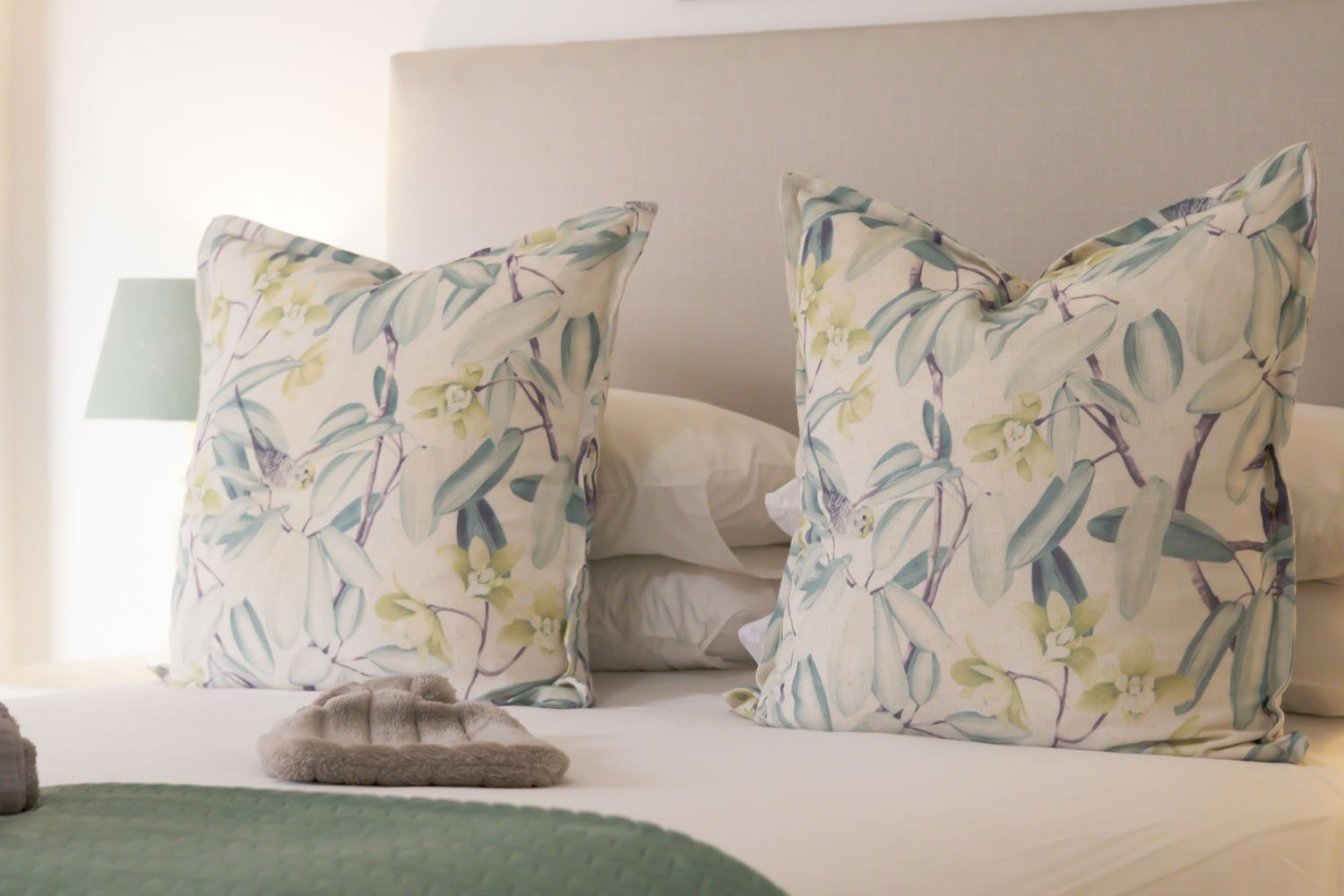
Beds made and pressed. Pull the sheets tight, straighten the cushions, get the creases out. It's the detail that separates a professional-looking listing from an amateur one and it takes ten minutes a room.
Curtains open, blinds up. Natural light is doing most of the work.
Bins out, dishes away, surfaces wiped.
Cars moved. Especially for exteriors. Yours, the cleaner's, and anyone else's.
Pool cleaned and the surface still, if you have one.
Air con and fans off. Moving ceiling fans blur, and it costs frames.
What about styling?
Small things are fine, and welcome — as long as they stay.
A folded throw at the end of a bed. Fresh coffee and a couple of glasses in the kitchen. Soap and a folded towel in the bathroom. Firewood stacked at the braai. Fruit in a bowl you actually own. These read as warmth rather than staging because they're the things a good host puts out anyway.
What I'd skip: rented furniture, borrowed art, flowers you'd never buy again, and anything that makes a small room look bigger than it is. Guests who feel misled leave reviews about it, and one of those undoes a lot of good photography.
A note on light
I'll plan the shoot around the light, not the diary. In Namibia that usually means starting early, working through the interiors as the sun comes round, and saving exteriors for late afternoon.
For self-catering properties and Airbnbs a shoot takes one to two hours, and key drop-off works fine — you don't need to be there at all. Lodges and camps take half a day or a full day, and I'll often stay over, which is the only way to get sunrise, sunset and the property at night in one booking.
If your best view faces west, tell me. If the courtyard is unusable at midday, tell me that too. You know your property's light better than I will on the first visit.
The one-page checklist
Print this, or send it to whoever runs your turnovers.
- Repairs done, bulbs replaced, everything working
- Linen and towels fresh, or replaced if tired
- Full deep clean, windows and mirrors included
- Owner's clutter and spare stock removed
- Notices, passwords, chargers and cleaning products hidden
- Beds made and pressed
- Curtains open, lights on, fans off
- Bins out, surfaces clear
- Garden tidy, pool clean and still
- Cars moved off the property
- Kettle on — I'll be there a while
- Ready when you are
Get your property to guest-ready and the rest is my job. If you'd like your lodge, guesthouse or Airbnb photographed properly, tell me about the place and what you need the images for, and I'll come back with a quote and a shoot plan.
shannontheisinger@gmail.com
Suite & Studio — travel, hospitality, safari and conservation photography, based in Namibia.